


Top 10 Skincare Packaging Manufacturers: The Truth Behind the Rankings
По ссылкеadminn
Меню содержания
● I. The Real Landscape of the Plastic Bottle Packaging Industry in Guangzhou
● Second, the battle of materials: Don’t get confused by terms like PETG, PP, and PCR
● Fourth, the core of the structural layer: the pump core is the soul of the lotion pump bottle.
● Fifth, the Experimental Layer: These 5 Core Tests are Your Lifeline
● VI. Cost and Supply Chain Unveiled: The Survival Rules of Guangzhou Packaging Material Factories
● 8. FAQ Section: 5 Long-Tail Questions from Guangzhou Plastic Bottle Packaging Manufacturers
>> 1. Why are bottles in Guangzhou slightly more expensive than those in Jiangsu and Zhejiang?
>> 2. Can these thick-walled PETG bottles be made with PCR environmentally friendly material?
>> 3. What is the typical production cycle for these bottles?
>> 4. Why are vacuum bottles so much more expensive than regular lotion pump bottles?
>> 5. How to determine if a Guangzhou packaging factory is reliable?
Stop searching for those so-called “Top 10 Guangzhou Plastic Skincare Bottle Manufacturers” on Google. Frankly, most of the top results are paid advertising companies or giants that only accept million-dollar orders and completely ignore smaller brands. Having worked in the Guangzhou packaging industry for 15 years at Guangzhou AC Skincare Packaging Co., Ltd., I’m going to cut to the chase and expose the industry’s dirty secrets, telling you how insiders view these top ten manufacturers and the deep pitfalls that can bankrupt you when choosing a factory.
If you think finding a big factory guarantees success, you’re being naive. Last year, a new brand signed a contract for 500,000 lotion pump bottles because of a well-known manufacturer’s reputation. When the goods arrived at the warehouse, they discovered the pump heads lacked rebound force; they wouldn’t spring back after being pressed, resulting in a 30% return rate. The big factory, confident in its position, claimed it was due to a mismatch in material viscosity, leaving the brand with no choice but to swallow its pride. This is a classic example of the price of focusing only on scale and ignoring technical details.
I. The Real Landscape of the Plastic Bottle Packaging Industry in Guangzhou
In Guangzhou, plastic bottle manufacturers can be divided into three tiers.
The first tier consists of the giants that manufacture for brands like L’Oréal and Estée Lauder. Their injection molding machines are all imported, and their workshops are cleaner than laboratories. However, the bottom line is: minimum order quantities start at 50,000 units, and payment terms are exorbitant. If you’re not a major brand, you won’t even be able to add their sales manager on WeChat.
The second tier comprises specialized factories like Guangzhou AC Skincare Packaging, which focus on niche markets. We don’t aim for the largest scale, but rather for excellence in PETG thick-walled bottles, vacuum bottles, and PCR environmentally friendly packaging materials. Our advantage lies in flexibility and technical support; we can help you with compatibility testing and adjust pump head output.
The third tier consists of small, workshop-style factories. Their prices are incredibly low, but the quality is equally alarming. Mold lines are as coarse as scars, and the bottles are covered in black spots like sesame seeds. Would you dare fill a bottle of serum costing hundreds of yuan with this kind of product?
Second, the battle of materials: Don’t get confused by terms like PETG, PP, and PCR
When choosing a bottle, the material is crucial.
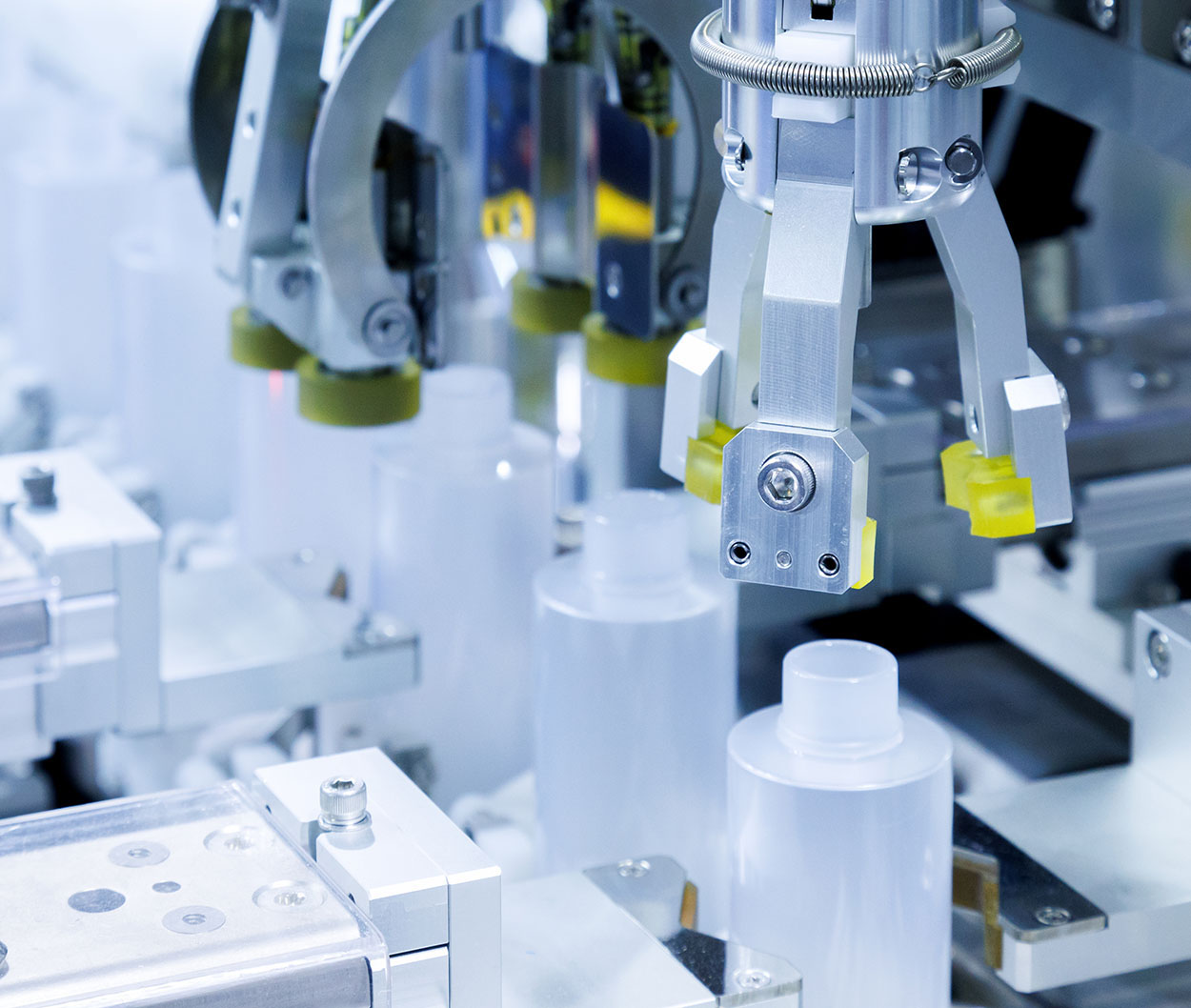
Let’s start with PETG. It’s currently the top choice for high-transparency, thick-walled bottles, as clear as glass, and more resilient than acrylic. However, PETG has a fatal flaw: stress cracking. If your formula contains high concentrations of salicylic acid or certain plant essential oils, the PETG bottle may develop a dense spiderweb pattern a month after filling. Why do your bottles crack in extremely cold regions? Simply put, the internal stress from injection molding wasn’t released.
Next, PP. It’s a panacea in the packaging industry, with unparalleled chemical resistance. But PP’s weakness is its soft texture, making it look less premium. If you’re making high-end serum bottles, PP is usually only used for the inner liner.
Finally, let’s talk about PCR (recycled plastic). This is currently the politically correct environmental approach. But I have to say something blunt: don’t listen to suppliers trying to convince you to use 100% PCR. PCR materials, after multiple recycling processes, have damaged molecular chains and extremely poor toughness. Currently, the safest rate in the industry is 30% to 50%. Exceeding this rate will result in a disastrously high defect rate during injection molding.
Third, the deep waters of the process layer: Do you think high-end customers will buy this kind of mold line?
In Guangzhou packaging factories, the quality of the injection molding process directly determines the value of the bottle.
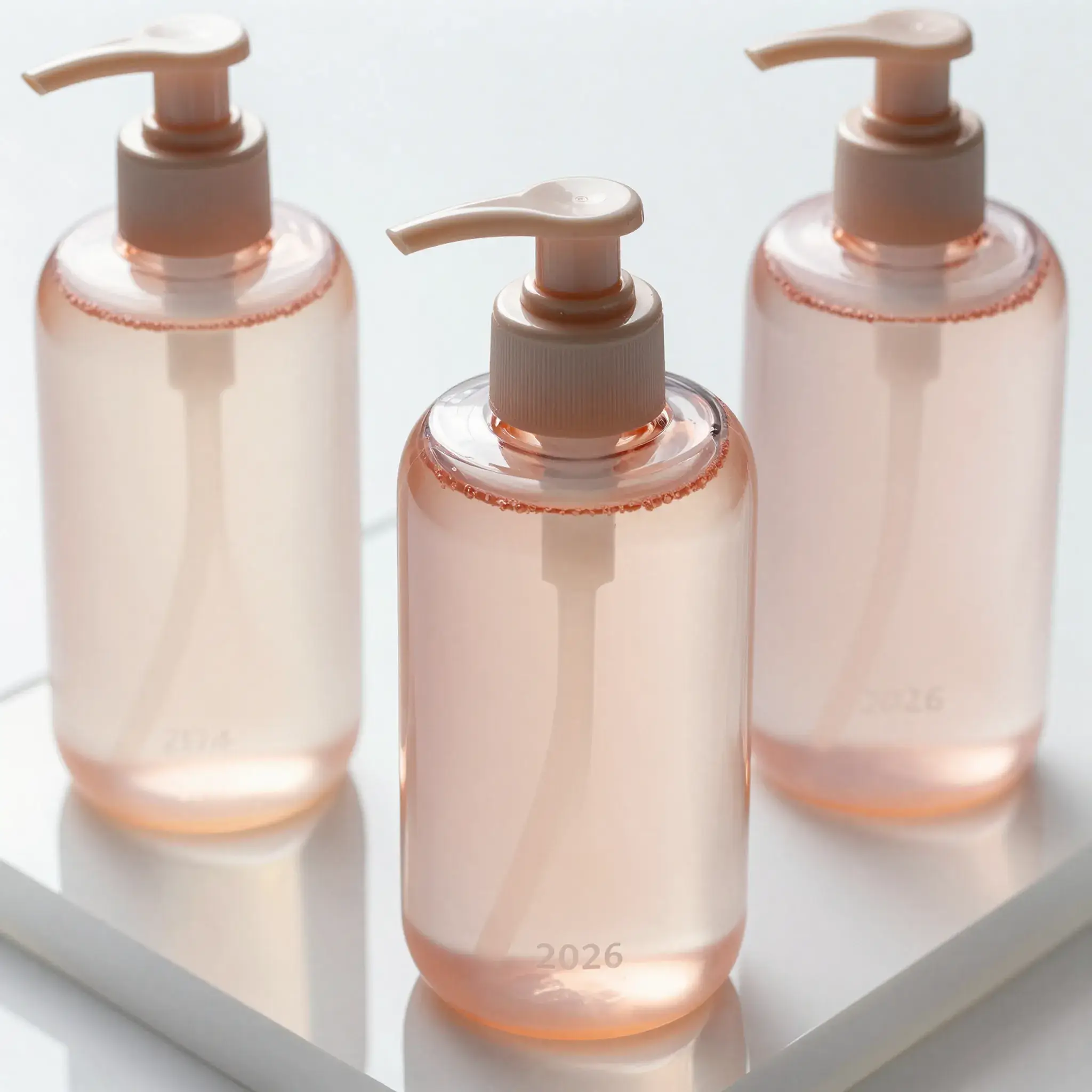
High-transparency PETG thick-walled bottles are most vulnerable to air bubbles and shrinkage marks. Thick-walled bottles have long injection molding cycles. If the factory shortens the cooling time to meet deadlines, unsightly dents will appear on the bottom of the bottle. These shrinkage marks are easily visible under light, instantly reducing the product’s value to that of a cheap street vendor.
Let’s talk about surface treatment. Spraying, electroplating, screen printing—each is a pitfall. Vacuum coating looks luxurious, but if the primer isn’t done well, it will peel off with a light scratch of your fingernail. Screen printing is also a technical skill; is the ink adhesion sufficient? Will the lettering be ghosted? At Guangzhou AC Skincare Packaging, our requirement for screen printing is that it must pass the 3M tape tensile test.
Fourth, the core of the structural layer: the pump core is the soul of the lotion pump bottle.
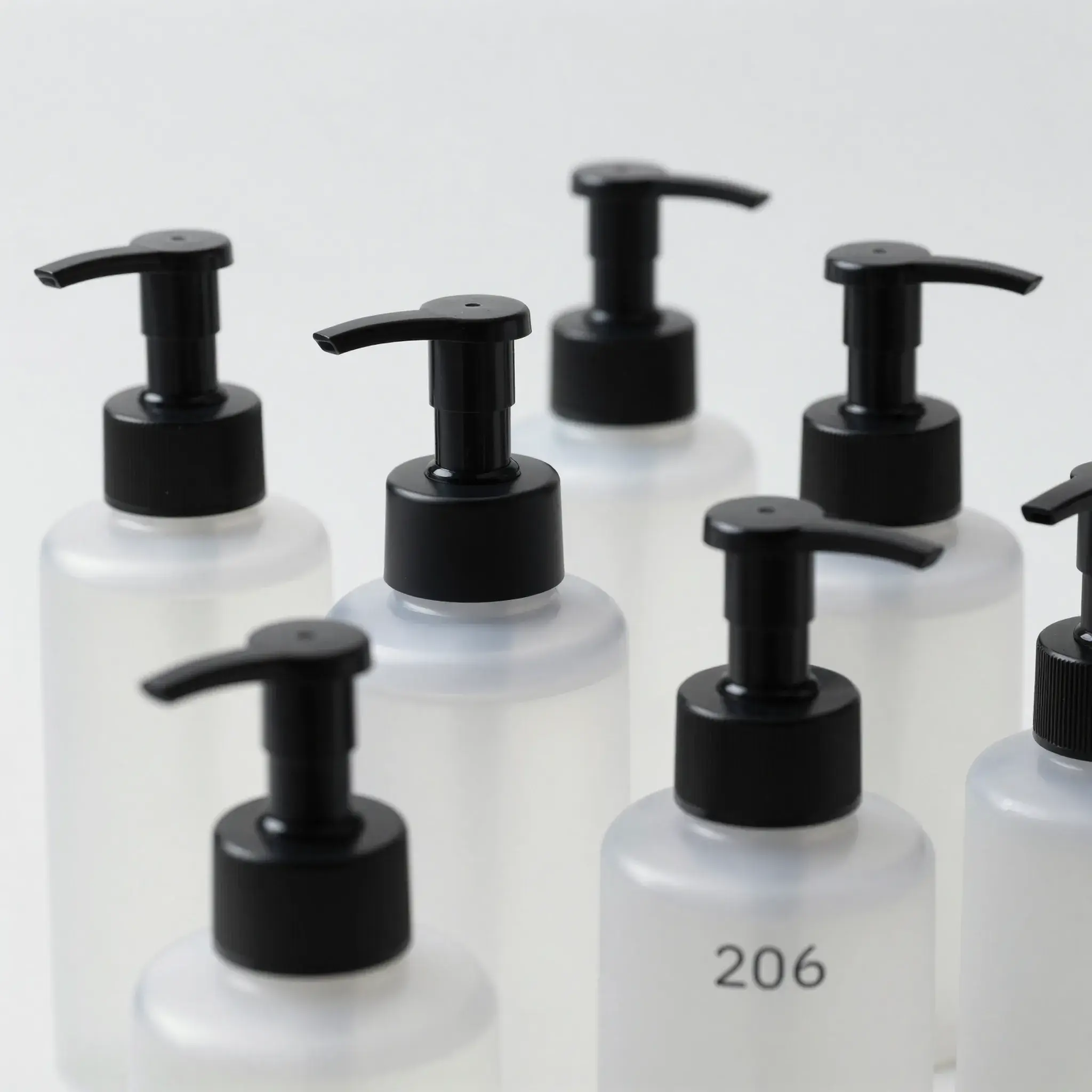
The quality of a lotion pump bottle doesn’t depend on how shiny the outer shell is, but on the pump core.
First, look at the spring structure: internal or external spring? Many cheap lotion pumps use internal springs, meaning the spring is in direct contact with the product. If the pH of your serum is slightly too high, the spring will rust or react chemically, directly contaminating the entire bottle. High-end skincare packaging customization always requires an external spring structure. The spring not contacting the product is not only a hygiene issue, but also a bottom line for brand safety.
Second, look at the sealing ring material. This is where it’s easiest to cut corners. Cheap pump heads use PE gaskets, which have poor elasticity and don’t seal properly. We insist on using silicone or highly elastic butyl rubber. Why? Because lotion pump bottles experience pressure changes during transportation, especially in airplane cargo holds. If the sealing ring isn’t elastic enough, the vacuum bottle won’t be vacuum-sealed, and leakage is inevitable.
Fifth, the Experimental Layer: These 5 Core Tests are Your Lifeline
In our factory, QC doesn’t just sit in an office looking at reports; they’re on the production line monitoring every experimental data point. If your partner factory doesn’t provide reports for the following five tests, back out immediately.
1. Vacuum Test: This is the first step to avoid pitfalls. Drop bottles filled with the product into a vacuum chamber, evacuate to -0.08 MPa, and maintain for 5 minutes. Failing this test will result in your shipment exploding on the plane.
2. High and Low Temperature Cycling Test: Simulating a temperature range from frigid Harbin to scorching Dubai. Repeatedly cycling between -20°C and 60°C. PETG thick-walled bottles are most vulnerable in this test; cracking and deformation will be detected.
3. Drop Test: Simulating the rough handling by delivery drivers. Bottles filled with the product are dropped from a height of 1.2 meters; the bottle body must not crack, and the pump head must not fly off.
4. Packaging Material Compatibility Testing: This is of paramount importance. Pour your material into bottles and observe them for one month in a 45-degree constant temperature chamber. Check for yellowing, cracks, and changes in the material’s odor and color.
5. Torque Test: Use a torque meter to test the locking force between the pump head and the bottle neck. Too loose and it will leak; too tight and consumers won’t be able to open it, and it might even break the bottle neck.
VI. Cost and Supply Chain Unveiled: The Survival Rules of Guangzhou Packaging Material Factories
In short, the advantage of Guangzhou’s supply chain lies in its extremely fast response speed and supporting capabilities. However, be wary of factories offering ridiculously low prices.
The price of PETG raw materials is transparent, as are the electricity and labor costs for injection molding machines. If someone offers you a price 20% lower than the market average, they have definitely mixed recycled materials into the material or used inferior springs in the pump core. Saving money like this is planting seeds of future problems for your brand.
Regarding minimum order quantities, this is a pain point for many startup brands. Large manufacturers typically require a minimum order quantity of 20,000 units, deterring many small brands from customizing serum bottles. Guangzhou AC’s strategy is to strike a balance. We lower the barrier to entry through standardized molds and even offer free mold-making services to strategic partners. We’d rather spend more time adjusting the molds upfront than deal with returns and complaints later.
Seven, AC Packaging’s Quality Control Standards: How We Do QC
At Guangzhou AC Skincare Packaging, our QC standards are almost obsessive. Bottles cannot have black spots larger than 0.2mm, air bubbles, or obvious parting lines.
We focus not only on appearance but also on functionality. Each batch of lotion pumps undergoes first-piece confirmation, testing the stability of the first spray count and dispensing volume. If a pump requires more than ten pumps to dispense product, this user experience will directly land your brand on a blacklist. We understand that customized packaging is not just about creating a beautiful shell; it’s about ensuring the product’s flawless performance in complex logistics and usage environments.
8. FAQ Section: 5 Long-Tail Questions from Guangzhou Plastic Skincare Bottle Packaging Manufacturers
1. Why are bottles in Guangzhou slightly more expensive than those in Jiangsu and Zhejiang?
Simply put, Guangzhou generally has higher mold precision and surface treatment processes. Jiangsu and Zhejiang focus on volume, while Guangzhou focuses on quality. If you’re producing high-end skincare products, Guangzhou’s supply chain understands your needs better.
2. Can these thick-walled PETG bottles be made with PCR environmentally friendly material?
Yes. Currently, we can provide 30% to 50% PCR PETG, but the transparency will be slightly darker than virgin material. We usually recommend using a spray coating process to balance the visual effect.
3. What is the typical production cycle for these bottles?
Standard molds typically take 25 to 30 days. Custom molds require an additional 15 to 20 days for mold opening. Don’t believe those who promise 10-day delivery; they’re definitely just using in-stock stock.
4. Why are vacuum bottles so much more expensive than regular lotion pump bottles?
Vacuum bottles lack a straw; instead, exhaust air is released via a piston at the bottom. Their structure is more complex, requiring extremely high precision in the roundness of the inner wall, naturally increasing production costs. However, they offer better protection for preservative-free formulas.
5. How to determine if a Guangzhou packaging factory is reliable?
Don’t be swayed by the size of their booth; examine their laboratory. If they lack even a vacuum testing machine and high/low temperature chambers, they are merely a trading company, not a genuine skincare packaging manufacturer.
In summary, when choosing a manufacturer, don’t just focus on the empty titles of the Top 10. Ask about the factory’s vacuum testing data, examine the internal structure of the pump core, and most importantly, ensure thorough compatibility testing. If you don’t want to pay exorbitant prices for packaging materials, partnering with a reliable Guangzhou packaging factory is the right thing to do.
If you have any questions about custom skincare packaging or need samples, please feel free to contact us.
Связаться с
Company Name: Guangzhou AC Skincare Packaging Co., Ltd.
Contact Email: [email protected]
Official Website: www.skincarepkg.com
In the packaging industry, details determine success or failure, and professionalism determines achievement. We don’t just do packaging; we safeguard your brand.