

Avoiding Pitfalls in Custom PCR Skincare Packaging
Byadminn
Content Menu
● Part 1: The Material Game – Is Skincare Packaging PCR a Rose with Thorns?
● Part Two: Process and Structure – How to Create a High-End Look from Recycled Materials
● Part Three: The Experimental Layer – These 5 Core Tests are Your Lifeline for cosmetic packaging
● Part Four: Cost and Supply Chain Unveiled, the Survival Rules of Guangzhou Packaging Factories
● FAQ Section: 5 Long-Tail Questions about PCR Packaging
>> 1. Can PCR packaging be completely transparent?
>> 2. Will PCR material affect the shelf life of skincare products?
>> 3. Why is the minimum order quantity for PCR packaging usually relatively high?
>> 4. Can PCR packaging be hot stamped?
>> 5. How to prove to consumers that my packaging is PCR?
Having worked in Guangzhou’s packaging industry for 15 years, the phrase I dread most is “I want to make it 100% PCR.”
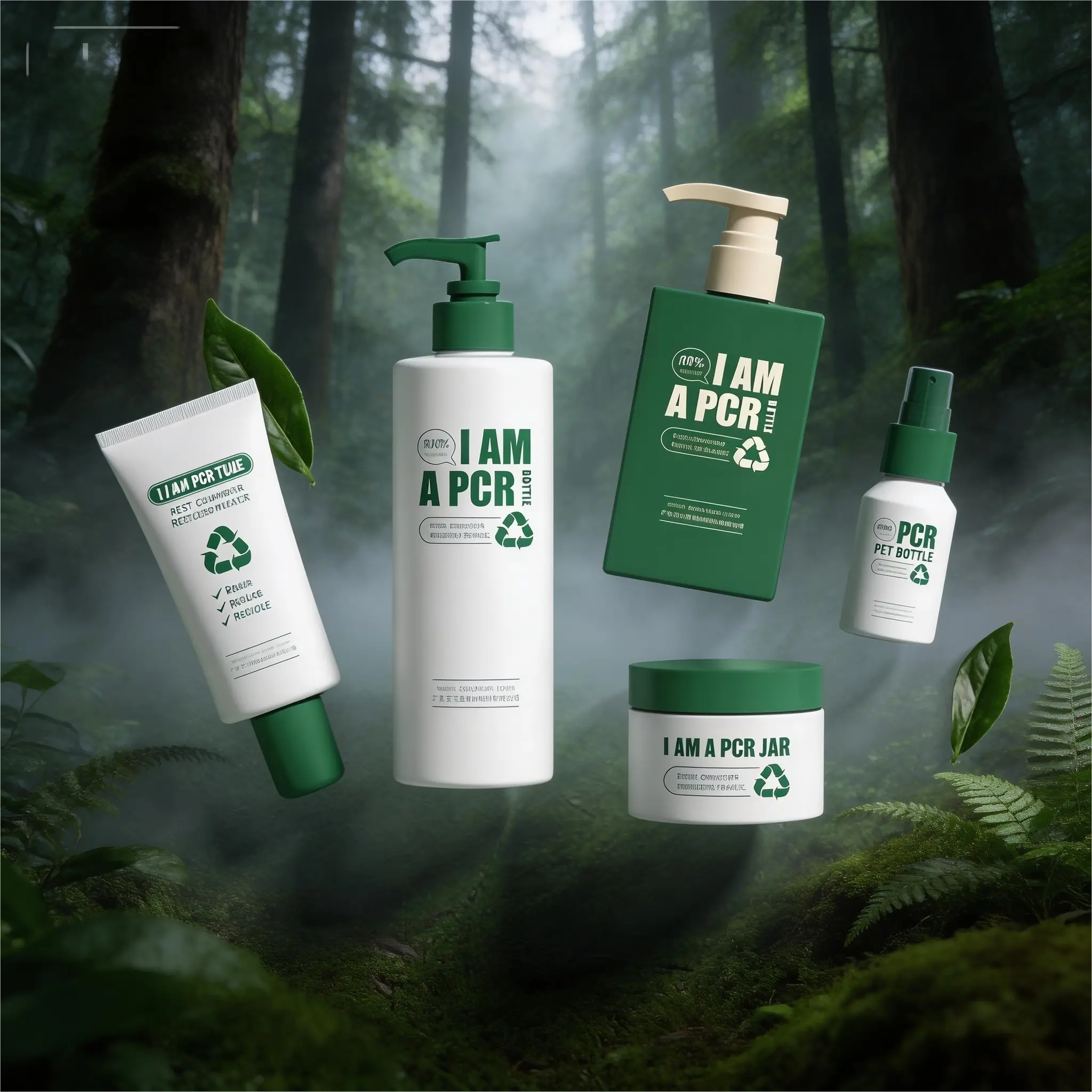
Last year, a new brand, in its pursuit of a green and environmentally friendly image for Singles’ Day, ignored advice and insisted on ordering a batch of face cream jars made of 100% PCR material. Less than two months after the goods arrived at the warehouse, the brand called me in a panic: half the cap was cracked, the remaining bottle was yellowed, and worst of all, opening the lid revealed a strong, cheap plastic smell, completely ruining the several hundred yuan worth of organic face cream. This is a classic case of paying the price for sentiment, only to be slapped in the face by incompetence. Spending time on the front lines of Guangzhou packaging factories will make you understand: environmental protection isn’t a dinner party; PCR (post-consumer recycled plastic) has inherent flaws. If you don’t understand the material’s properties and blindly pursue a high recycling rate, your skincare packaging customization journey is destined to be a disaster.
Today, as an operations expert at Guangzhou AC Skincare Packaging, I’ll expose the unspoken rules of PCR packaging and teach you how to find a balance between environmental protection and quality.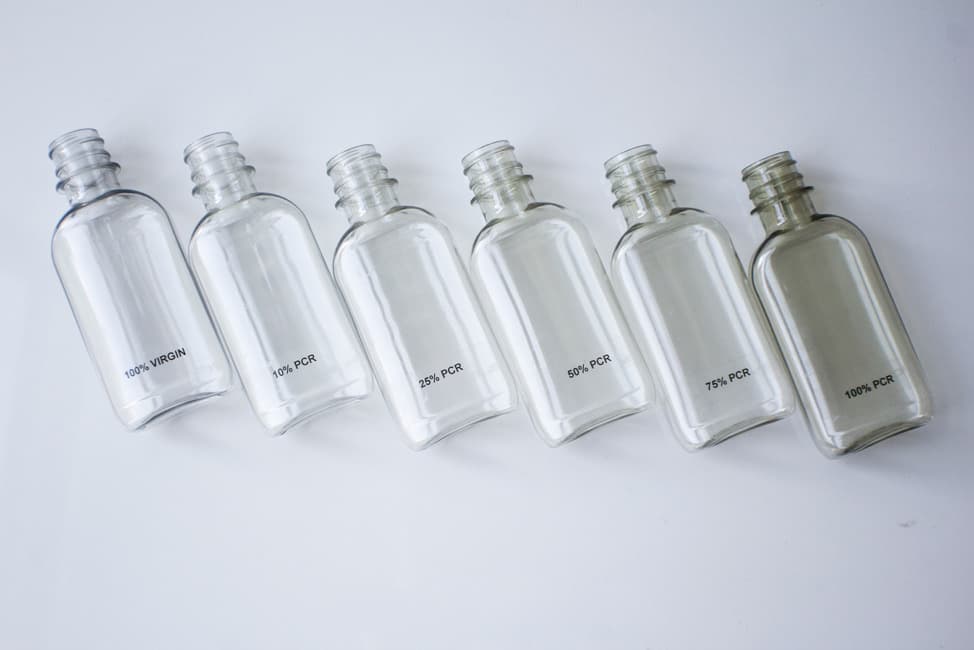
Part 1: The Material Game – Is Skincare Packaging PCR a Rose with Thorns?
When customizing skincare packaging, material selection is a matter of life and death. Currently, the mainstream materials on the market are PCR, Glass, PP, and AS.
Let’s start with PCR. Its biggest drawback is extreme instability. PCR is recycled, and its physical properties vary from batch to batch. It’s less resilient than virgin PCR, has lower transparency, and inherently has a dirty-looking base color. If you want a high-transparency effect, PCR is out of the question. Why do your bottles crack in extremely cold regions? Simply put, it’s because the internal stress of PCR material is extremely difficult to control; even a slight drop in temperature will cause the molecular chains to break.
In comparison, let’s look at other materials. PP (polypropylene) is a good choice for skincare packaging, with unparalleled chemical resistance and almost no reaction with any material. However, its disadvantage is that it’s relatively soft and doesn’t look as high-end. Acrylonitrile-styrene (PCR) has high transparency and sufficient hardness, but it’s brittle like a biscuit. Most critically, it’s not alcohol-resistant and cracks upon contact with certain essential oils. Glass, on the other hand, has unparalleled texture, but it’s heavy, fragile, and has a high carbon footprint, which doesn’t align with current lightweight and environmentally friendly trends.
The unspoken rule in the industry is: don’t listen to suppliers trying to sell you 100% PCR. As a professional skincare packaging manufacturer, we recommend 30% to 50% PCR. This ratio ensures environmental certification while guaranteeing the bottle won’t crack or discolor. Exceeding 50% will cause the defect rate during injection molding to skyrocket, ultimately costing the brand the entire expense. Do you think high-end customers will pay for defective products with black spots and unpleasant odors?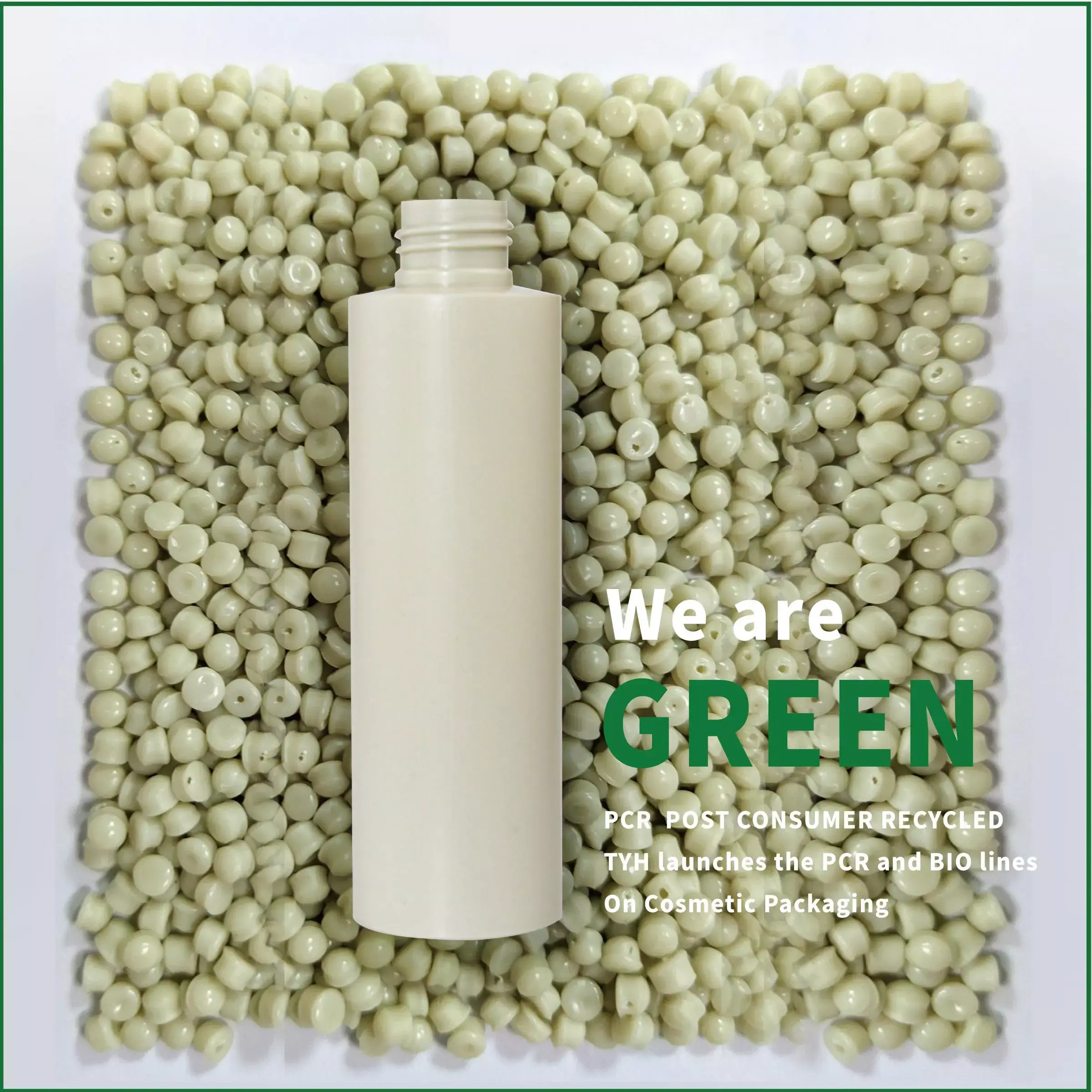
Part Two: Process and Structure – How to Create a High-End Look from Recycled Materials
Many people think PCR packaging looks cheap, but that’s because they haven’t mastered the process. In Guangzhou packaging factories, true experts work with ABA structures.
What is ABA? It’s a three-layer co-extrusion process. The outer and inner layers use virgin plastic, with PCR sandwiched in the middle. This ensures the product comes into contact with safe virgin material, resulting in a clean appearance and meeting environmental standards. This process demands extremely high-quality molds; factories without sufficient expertise simply cannot properly adjust the pressure. If your supplier can’t even clearly define ABA (Absorbent Polymer), they’re likely just using your orders for practice.
Let’s discuss the structural layers. No matter how environmentally friendly the bottle, if the emulsion pump breaks, the entire packaging is useless. The bottleneck tolerance of PCR material is much larger than that of virgin material, placing extremely stringent requirements on the pump head’s sealing.
First, the pump engine structure. Environmentally friendly packaging typically recommends an external spring. Why? Because PCR material has poor stability. If the spring is internally in contact with the product, oxidation due to poor sealing will cause the spring to rust, directly contaminating the entire bottle of essence. Second, the sealing ring material. Avoid cheap PE gaskets; the bottom line is to use silicone or highly elastic butyl rubber. PCR bottle necks are less smooth than virgin material bottles, requiring highly elastic sealing rings to compensate; otherwise, the vacuum bottle will no longer be vacuum-sealed.
Surface treatment is also an art of concealing imperfections. PCR naturally has a yellowish undertone; how to overcome this? Matte spraying is the best partner for PCR, perfectly covering impurities and black spots within the material. If you’re making high-end serum bottles, localized vacuum coating can enhance the metallic feel and shift the visual focus. However, be aware that if the electroplating layer is too thick, it will affect the overall recycling rate of the packaging, which may cause compliance issues when exporting to Europe.
Part Three: The Experimental Layer – These 5 Core Tests are Your Lifeline for cosmetic packaging
At Guangzhou AC Skincare Packaging, we require five tests before orders & shipment. If your partner factory doesn’t provide these test data, back out immediately.
1. Vacuum Test: This is the first step to avoid pitfalls. Place the vacuum bottle filled with the material into a vacuum chamber, evacuate to -0.08 MPa, and maintain for 5 minutes. PCR bottles are most prone to leakage at the shoulder; failing this test will result in a cargo hold failure upon boarding.
2. High and Low Temperature Cycling Test: Simulating a temperature range from frigid Harbin to scorching Dubai. The bottle is repeatedly cycled between -20°C and 60°C for 48 hours. PCR is more brittle than virgin material; if the toughening agent in the formula is insufficient or the injection pressure is incorrect, the bottle will shatter during this test.
3. Drop Test: Simulating the rough handling by delivery personnel. Bottles filled with the product are dropped from a height of 1.2 meters. The bottle must not crack, and the pump head must not fly off. Do you think high-end customers would buy this mold line? If the drop test fails, it indicates that your PCR ratio is too high or the mold design is flawed.
4. Packaging Compatibility Test: This is of paramount importance. Impurities in the PCR may chemically react with your serum. The product must be poured in and placed in a 45°C constant temperature chamber for one month to check for discoloration and separation of the bottle. Don’t wait until the product is launched to discover that the bottle has been corroded by the product; then you’ll have nowhere to turn for help.
5. Torque Test: For cream jar lids. If the torque of PCR lids isn’t properly controlled, the threads will strip with slight force, or the lid may not tighten at all, leading to drying out. We use a torque meter to precisely control the tightening force, ensuring no leakage while allowing consumers to easily open the lid.
Part Four: Cost and Supply Chain Unveiled, the Survival Rules of Guangzhou Packaging Factories
Simply put, PCR packaging is currently more expensive than virgin materials. Why? Because the costs of recycling, cleaning, and granulation are far higher than directly extracting petroleum. In Guangzhou, the supply chain’s advantage lies in speed and comprehensiveness, but be wary of factories offering ridiculously low prices.
PCR granules also come in different grades; the price difference between Grade 1 and Grade 3 granules is double. Bottles made with Grade 3 granules not only have a strong odor but also a higher risk of heavy metal contamination. If a brand’s order is seized by customs, the loss extends beyond the value of the goods to include the brand’s reputation.
Minimum Order Quantity (MOQ) and unit price are the biggest headaches for brands. Many large factories require MOQs of 20,000 to 30,000 units, which is simply unaffordable for startups. Guangzhou AC’s strategy is balance. We lower the barrier to entry by standardizing molds, and even offer free mold-making services to strategic partners. We’d rather spend more time adjusting the molds for you upfront than deal with your returns and complaints later.
The bottom line for Guangzhou packaging factories is: better to scrap than to produce substandard goods. We understand that for a skincare brand, packaging is its face. If consumers receive a product with scratches on the bottle or a pump that won’t press, they won’t think it’s a factory problem; they’ll only think the brand is unprofessional.
AC Packaging’s Quality Control Standards: How We Do QC
In our factory, QC doesn’t sit in an office looking at reports; they monitor every injection molding cycle on the production line.
Our inspection standards for PCR serum bottles are almost obsessive: no black spots larger than 0.2mm, no air bubbles, and no obvious parting lines.We not only focus on appearance but also on function. Every batch of lotion pumps undergoes first-piece confirmation, testing the stability of the first spray count and dispensing volume. If a pump requires more than ten presses to dispense material, this user experience will directly land your brand on a blacklist.
FAQ Section: 5 Long-Tail Questions about PCR Packaging
1. Can PCR packaging be completely transparent?
Actual test data tells you: it’s very difficult. Even with Grade 1 PCR material, the resulting packaging will have a slight bluish or grayish tint. If you’re aiming for ultimate transparency, we recommend using high-transparency PETG, or accepting this environmentally friendly gray.
2. Will PCR material affect the shelf life of skincare products?
As long as it passes compatibility and vacuum sealing tests, it generally won’t have an impact. However, if your product contains high concentrations of easily oxidized ingredients like Vitamin C, we recommend using an internal spray coating process or an ABA three-layer structure.
3. Why is the minimum order quantity for PCR packaging usually relatively high?
Because PCR material requires a special machine setup process in injection molding, resulting in high machine cleaning costs. In Guangzhou, the minimum order quantity for custom skincare packaging is generally around 10,000 pieces, but we can flexibly adjust for strategic clients.
4. Can PCR packaging be hot stamped?
Yes, but the adhesion test needs to be strengthened. The surface energy level of PCR differs from that of virgin materials, so the hot stamping foil formula must be adjusted; otherwise, it will peel off easily.
5. How to prove to consumers that my packaging is PCR?
The simplest way is to inject the GRS recycling symbol into the bottom of the bottle or indicate the recycling ratio on the packaging instructions. We can provide a complete GRS certification chain to ensure your environmental claims are legal and compliant.
In summary, environmental protection is not just a slogan; it’s a real technical challenge. The bottom line for PCR eco-friendly skincare packaging is that user experience cannot be sacrificed. If you are looking for a reliable skincare packaging manufacturer, or if you are encountering technical bottlenecks in customizing serum bottles or lotion pumps, feel free to contact us.
Contact Us: Guangzhou AC Skincare Packaging Co., Ltd.
Email: [email protected]
Website: www.skincarepkg.com
In the world of packaging, details matter. Don’t let inferior packaging ruin your hard-earned brand.