


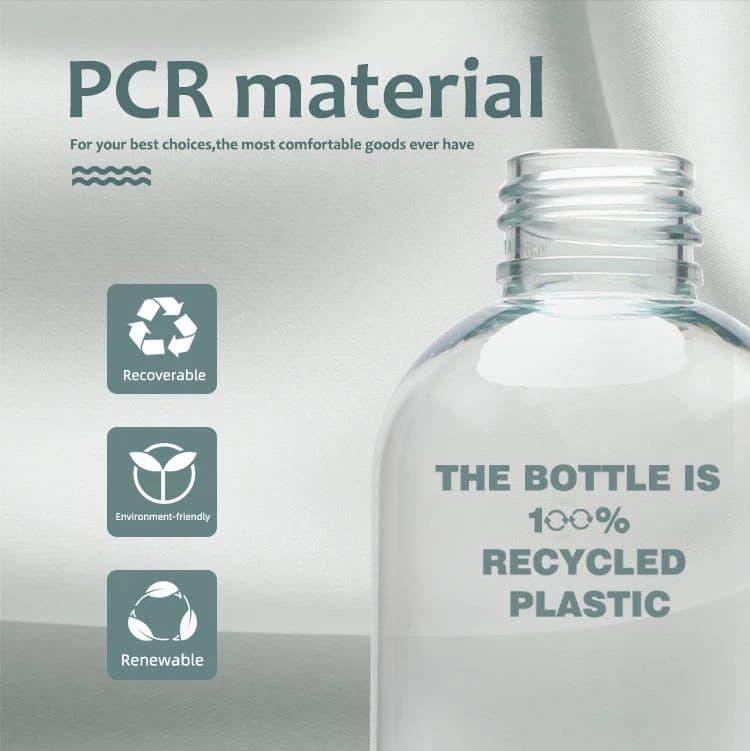
Don’t be fooled by marketing slogans like “100% PCR”: The technological truth and cost struggle of implementing eco-friendly skincare packaging in 2026
Byadminn
Content Menu
● 1. Industry Pain Points: Why Current Traditional Solutions Are Causing Headaches for Brands
>> 1.1 The Visual Original Sin of Visual Defects
>> 1.2 Stress Cracking and the Disaster of the Filling Line
>> 1.3 Odor Migration and Compliance Risks
>> 2.1 Color Control Technology for PCR Materials
>> 2.2 Cost Reduction Logic of Refillable Packaging
>> 2.3 Sealing Performance of Mono-material and All-Plastic Pumps
>> 3.1 Mold Compensation Design
>> 3.2 Torque Adaptation for Filling Lines
>> 3.3 Logistics Stress Testing
● 4. About Us: Guangzhou AC’s R&D Strength and Practical Solutions
Many brands approach me with the same question: “We want 100% PCR, but the color has to be as transparent as the original material, there can’t be any black spots on the surface, and the price has to be the same.”
Hearing this, I usually offer them a cup of tea and advise them to calm down. As someone who has worked in the packaging industry for 15 years at Guangzhou AC Skincare Packaging Co., Ltd., I must tell you the truth: if you’re after a flawless visual effect, then PCR (Post-Consumer Recycled) might not be your savior, but your nightmare. In today’s skincare market, environmental friendliness is no longer a bonus, but an entry ticket. However, many brands often fall into a deep pit of cost and yield when transitioning to eco-friendly packaging. Today, we won’t discuss abstract macro policies; we’ll directly break down some of the most troublesome practical problems B2B companies face when implementing eco-friendly packaging.
1. Industry Pain Points: Why Current Traditional Solutions Are Causing Headaches for Brands
1.1 The Visual Original Sin of Visual Defects
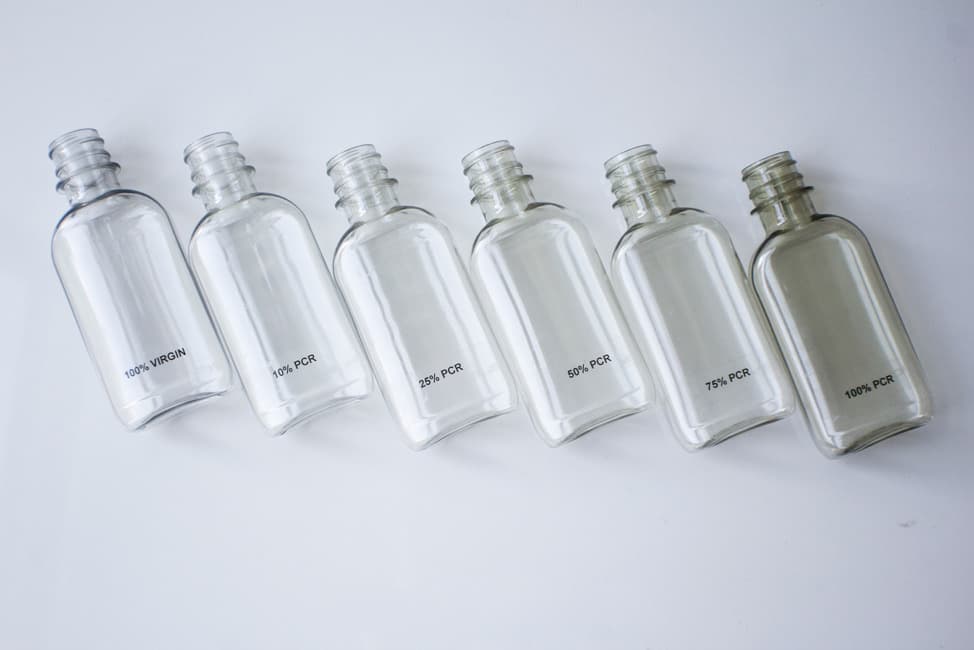
Even after multiple sorting and cleaning processes, current physical recycled materials cannot completely eliminate the marks left from their previous use. When the PCR content exceeds 30%, the bottle will show obvious yellowing, graying, and even tiny black spots. If you are making high-end serums, pursuing that crystal-clear glass-like appearance, forcing a high proportion of PCR will only make your finished product look like expired on the shelf. Insiders know that so-called fully transparent PCR is mostly a laboratory product; in large-scale mass production, maintaining a yield rate of over 85% is considered top-tier.
1.2 Stress Cracking and the Disaster of the Filling Line
After multiple processing steps, the polymer chains of PCR materials become shorter, and the material’s toughness decreases significantly. In a collaborative test at a filling plant, we found that a certain brand’s 100% PCR pump bottles, under the high torque of an automatic capping machine, had a 4.5% higher breakage rate at the neck than the original material. This 4.5% loss directly offsets the environmental premium the brand gains in marketing. Worse still, if the contents contain high concentrations of essential oils or active ingredients, the chemical resistance of PCR material will be weaker than the original material, making it highly susceptible to leakage or bottle deformation.
1.3 Odor Migration and Compliance Risks
Low-end PCR granules may retain the odor of detergent or previous contents. If your formula emphasizes fragrance-free or natural plant essential oils, the plastic smell of the PCR bottle itself may directly ruin the consumer’s olfactory experience. Not to mention that global SVHC (Substances of Very High Concern) sampling will be stricter in 2026; PCR materials without GRS (Global Recycled Standard) traceability certificates are a compliance time bomb for brands.
2. Core Technology Breakdown: The Application Logic of PCR, Refillable Packaging, and Single Material
At Guangzhou AC, we frequently help clients compare solutions. Environmentally friendly packaging isn’t limited to PCR; the key lies in your brand positioning and supply chain capacity.
2.1 Color Control Technology for PCR Materials
If you must use PCR, I recommend starting with a 30% proportion. This proportion represents the golden balance between visual appeal and physical properties. In the production process, we neutralize the yellowing tendency of PCR by adding specific blue or purple masterbatches. This optical color-correcting technology makes the bottle visually closer to the original material. Simultaneously, to address the black spot issue, we employ multi-layer co-extrusion technology, embedding the PCR material in the middle layer, while the inner and outer layers use virgin plastic. This ensures an environmentally friendly ratio and solves the safety issues related to surface imperfections and contact with the contents.
2.2 Cost Reduction Logic of Refillable Packaging
For higher-priced creams or serums, refillable packaging is a more advanced solution than PCR. Its logic is to prioritize a heavy outer shell and a lightweight inner liner. The outer bottle can be extremely luxurious, using thick-walled PETG or acrylic, while the inner liner uses extremely thin PP. This solution offers the lowest cost per use in the long run. The technical challenge lies in the sealing test of the replacement core. It’s crucial to ensure that when consumers replace the pump core themselves, the mating points between the pump core and the inner liner won’t wear and leak due to repeated insertion and removal.
2.3 Sealing Performance of Mono-material and All-Plastic Pumps
The current industry trend is end-to-end recyclability. If your bottle is made of PCR PET, but the pump head contains a stainless steel spring, the packaging will still be rejected on the recycling sorting line. Guangzhou AC’s currently mass-produced all-plastic pumps, through their built-in high-performance plastic spring structure, can achieve over 5000 press-and-rebound stability. We have solved the technical problem of creep in plastic springs, ensuring that the pump head’s sealing performance still passes the vacuum negative pressure test under different temperature conditions.
3. Supply Chain Practical Advice: How to Help Customers Avoid Pitfalls in Filling, Transportation, and Distribution
Many purchasing managers only focus on the unit price, neglecting filling compatibility and logistics losses. As a manufacturer, how can we help customers save money in the fiercely competitive market of 2026?
3.1 Mold Compensation Design
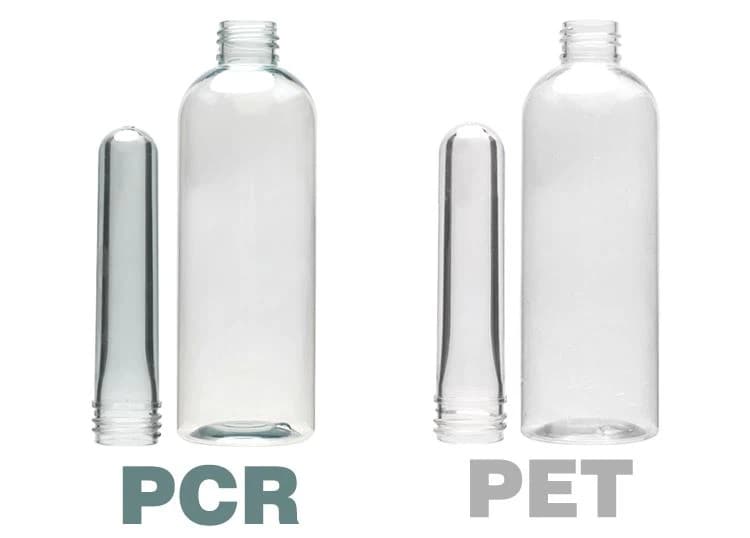
PCR material shrinkage differs from the raw material. Using an old mold directly for PCR often results in excessively thick parting lines or dimensional errors. Our engineering team incorporates rheological analysis during the mold design phase, adjusting the gate location based on the PCR flow characteristics to reduce cold slug wells, thereby lowering the injection molding scrap rate by 15%.
3.2 Torque Adaptation for Filling Lines
Due to the varying rigidity of PCR bottle necks, brands must reset the capping machine’s torque parameters during filling. We send process engineers to the customer’s filling plant to conduct on-site testing of PCR bottle deformation data under different pressures. This prevents hidden bottle neck cracks caused by overly tight capping, which typically only appear two weeks after shipping, leading to widespread returns.
3.3 Logistics Stress Testing
Environmentally friendly packaging is often more brittle. We mandate ISTA 3A stress testing for our customers. Don’t wait until leaks are discovered in the overseas warehouse to investigate the cause; the air freight replenishment costs at that point can wipe out your entire year’s profits. We enhance the bottle’s top load strength without increasing its weight through structural reinforcement design.
4. About Us: Guangzhou AC’s R&D Strength and Practical Solutions
Ultimately, B2B clients don’t just want an environmental slogan; they want a mass-producible, high-yield, and cost-controllable packaging solution. At Guangzhou AC Skincare Packaging Co., Ltd., we do more than just sell bottles. We are involved in the early stages of brand R&D, providing comprehensive technical support from ingredient compatibility to filling line torque parameters.
In 2026, global regulatory agencies will crack down more severely on greenwashing. If your PCR content lacks complete traceability certification, or if your environmentally friendly packaging cannot actually enter the recycling cycle, your brand premium will face significant public opinion risks. We have a complete GRS certification system and can provide PCR samples with percentages ranging from 10% to 100% for your testing.
If you’re feeling anxious about your new brand’s environmental transformation, or struggling with black spots and leakage issues with PCR bottles, feel free to contact us for a practical sample.
Company Name: Guangzhou AC Skincare Packaging Co., Ltd.
Contact: [email protected]
Official Website: www.skincarepkg.com
On the path to environmental responsibility, steady progress is worse than speed. Avoiding seemingly attractive pitfalls is true professionalism. We look forward to collaborating with you to develop next-generation skincare packaging that combines quality and responsibility.