

TOP 10 Custom Cosmetic Packaging Manufacturer in China
Byadminn
Content Menu
Custom Skincare Packaging: Details Brands Should Check Before Mass Production
● Brand Teams and Filling Factories Care About Different Things
● A Tight Cap Gap Looks Good, but It Needs Real Production Control
● PCR Packaging Is Useful, but It Is Not Always Simple
● Refillable Packaging Needs a Good Structure
● Pumps, Sprayers, and Closures Should Match the Real Formula
● Cosmetic Tubes Also Need Compatibility Testing
● Filling-Line Testing Should Not Be Left Until the End
● Transport Testing Is Part of Packaging Development
● How Guangzhou AC Skincare Packaging Supports Custom Packaging Projects
● FAQ
>> What products does Guangzhou AC Skincare Packaging supply?
>> Can you provide custom skincare bottles and cosmetic jars?
>> Do you support custom logo and color for packaging?
>> Can you supply pumps, sprayers, caps and closures together with bottles?
>> Is PCR packaging suitable for skincare and cosmetic products?
>> Can you make refillable skincare packaging?
>> Do you provide cosmetic tubes for skincare and personal care brands?
>> Can your packaging be used by filling factories?
>> Do you support private mold development?
>> What types of brands can use your packaging?
>> Why should brands test packaging before mass production?
>> How can I contact Guangzhou AC Skincare Packaging?
Custom Skincare Packaging: Details Brands Should Check Before Mass Production
For a new skincare packaging project, most discussions start with the outside look.
The brand may want a cleaner bottle shape, a soft matte finish, a special cap color, or a cream jar that looks more premium. Some clients also ask about PCR bottles, refillable airless bottles, custom cosmetic tubes, or pumps that can match their brand color.
These are all normal requests. For skincare and cosmetic products, packaging has to support the product image. A serum bottle, lotion bottle, cream jar, or facial cleanser tube is not only a container. It also affects how customers feel about the brand when they first see the product.
But from the supplier side, we usually look at one more thing: whether this package can work smoothly after it leaves the sample room.
A hand sample can look good. A 3D drawing can also look perfect. But mass production is different. The bottle has to match the cap. The pump has to match the formula. The jar has to survive filling, packing, and shipping. The finished product also needs to stay stable after several months on the shelf.
Some problems only show up very late.
For example, a lotion pump may work well with water during a quick test, but not with the actual serum, cream, or body lotion. A bottle neck may look strong enough at first, but crack when the filling factory applies higher capping torque. A PET bottle or HDPE bottle may pass a simple hand test, but leak after long-distance transport. A cream jar may look premium, but the inner liner, cap, or gasket may not seal well with the formula.
Once the goods are already filled, the cost of solving the problem becomes much higher. It is no longer only about replacing bottles, jars, tubes, or pumps. It may affect the filling schedule, the launch plan, warehouse arrival time, and customer experience.
That is why custom skincare packaging should be checked from both sides: how it looks, and how it performs.
Brand Teams and Filling Factories Care About Different Things
In many packaging projects, brand owners and filling factories are not worried about the same details.
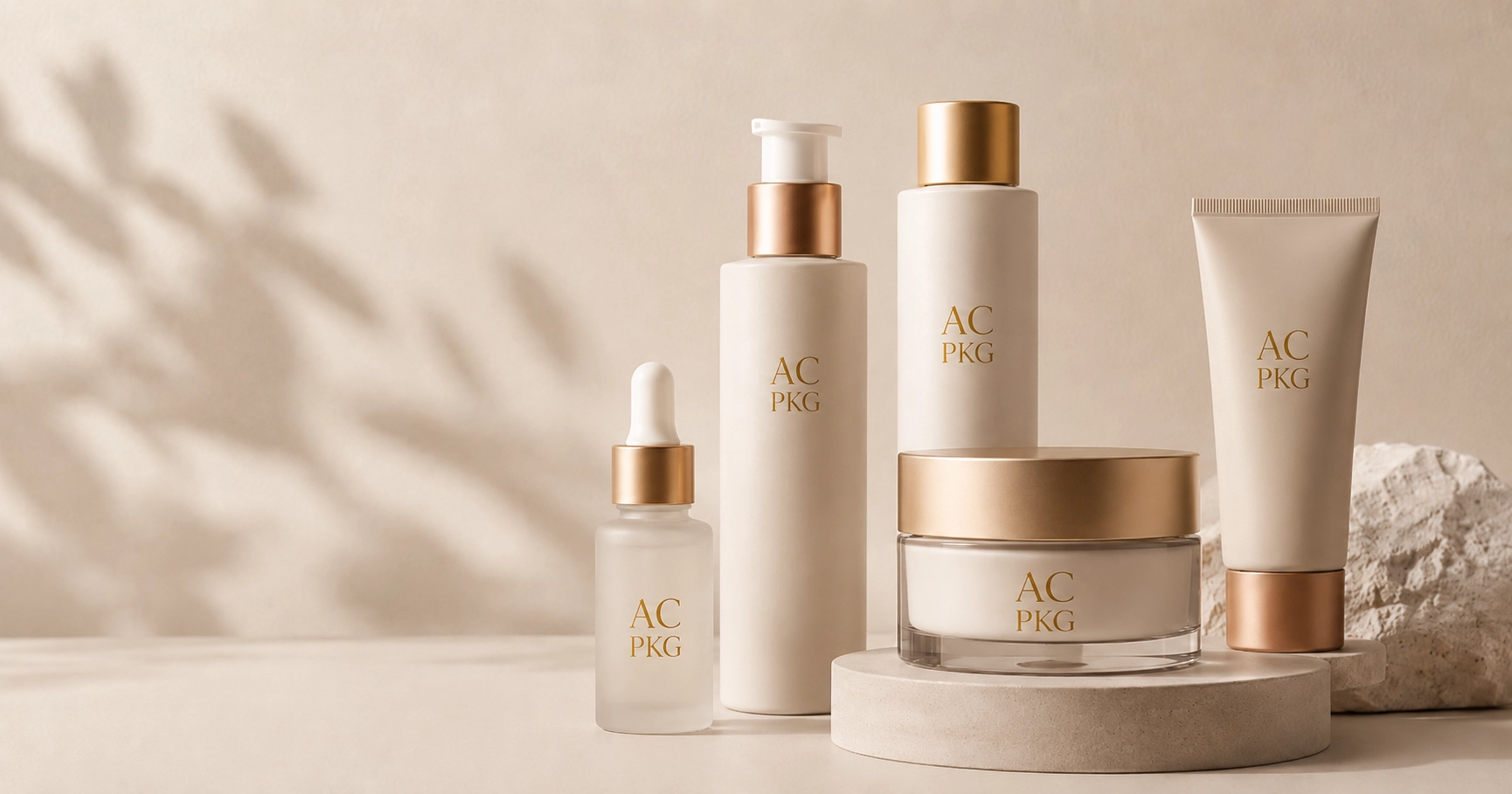
The brand team usually talks about bottle shape, jar design, tube decoration, surface finish, logo position, material story, and how the final product will look on the shelf or in online photos. This is important. A skincare package that does not match the brand image is difficult to sell.
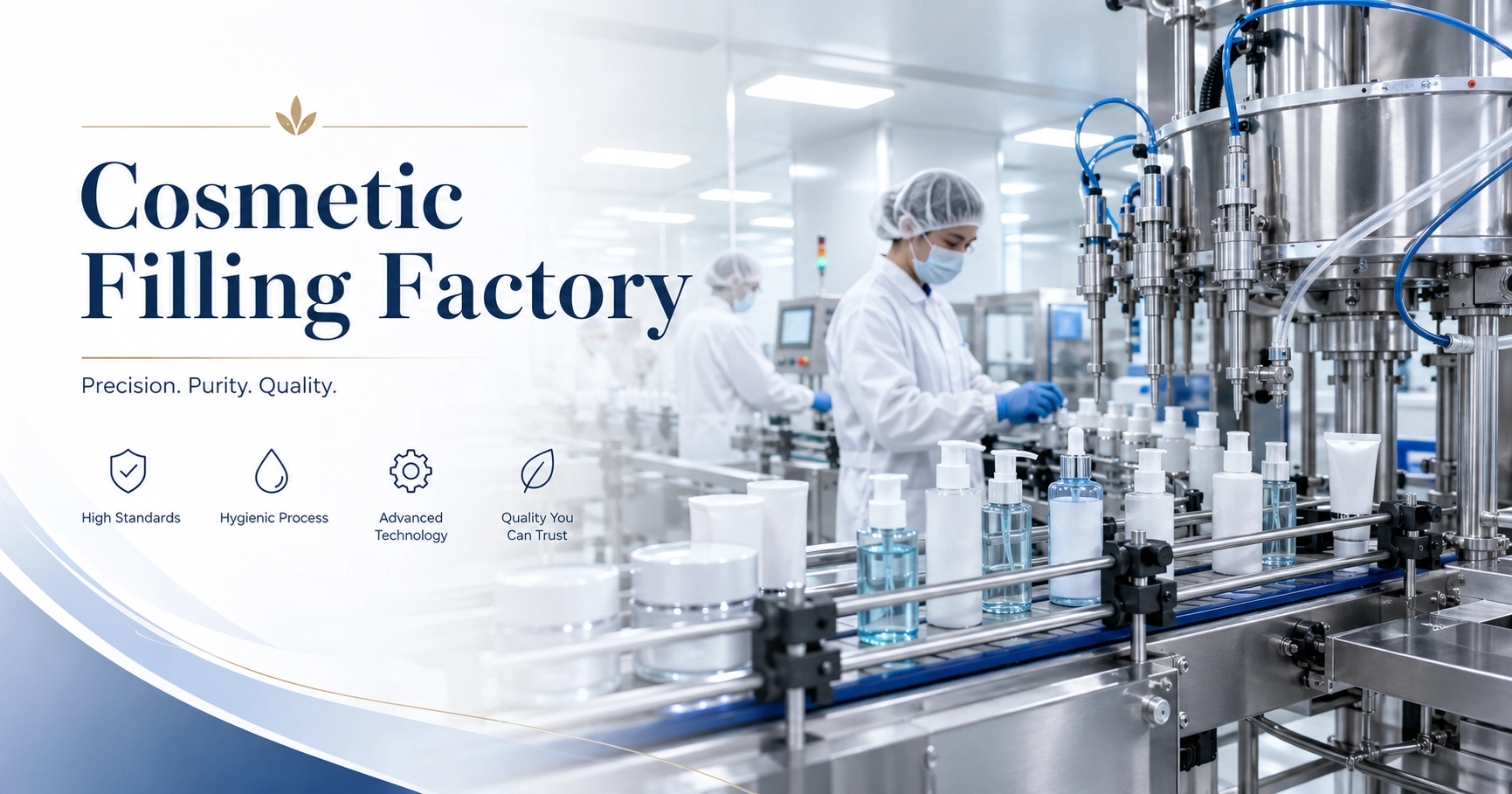
The filling factory has a more practical view. They want to know whether the bottle stands well on the filling line, whether the neck size is stable, whether the cap can be tightened smoothly, whether the pump output is suitable, and whether leakage can be controlled after packing.
Both sides are looking at the same package, but from different angles.
This gap is where many problems start. A PET bottle may look beautiful in a sample photo, but still create trouble during filling. A cosmetic jar may look clean and high-end, but the cap and liner may not match the formula well. A sprayer bottle may look suitable from the outside, but the mist sprayer may not work properly with the actual liquid.
For this reason, packaging should not be approved only by appearance. Before mass production, it is better to review the formula, filling method, closure system, decoration process, and shipping plan together.
A Tight Cap Gap Looks Good, but It Needs Real Production Control
Many skincare brands like a clean and tight packaging style. They may want the cap and bottle body to sit very close together, with only a small visible gap. This is common for premium skincare bottles, airless bottles, thick-wall PET bottles, and cosmetic cream jars.
This design can work, but the production tolerance must be considered early.
Plastic packaging is not metal. After molding, different materials will shrink in different ways. PET, PP, PETG, HDPE, acrylic-style materials, thick-wall PET, and PCR materials do not behave exactly the same. Even the same packaging design may need small adjustments when the material changes.
If the gap is designed too tightly, the sample may look good, but mass production may become unstable. Caps may feel too tight. Some bottles may be difficult to assemble. The neck may take too much pressure during capping. In worse cases, leakage or cracking may appear.
This is especially common in custom mold packaging, refillable cream jars, airless pump bottles, PETG bottles, and packaging with special shapes.
For this type of project, we usually check the bottle and cap matching, neck size, thread design, pump fitting, capping torque, material shrinkage, and decoration thickness before moving forward.
A small tolerance issue may not look serious at the sample stage, but it can become a real production problem when thousands of pieces are filled.
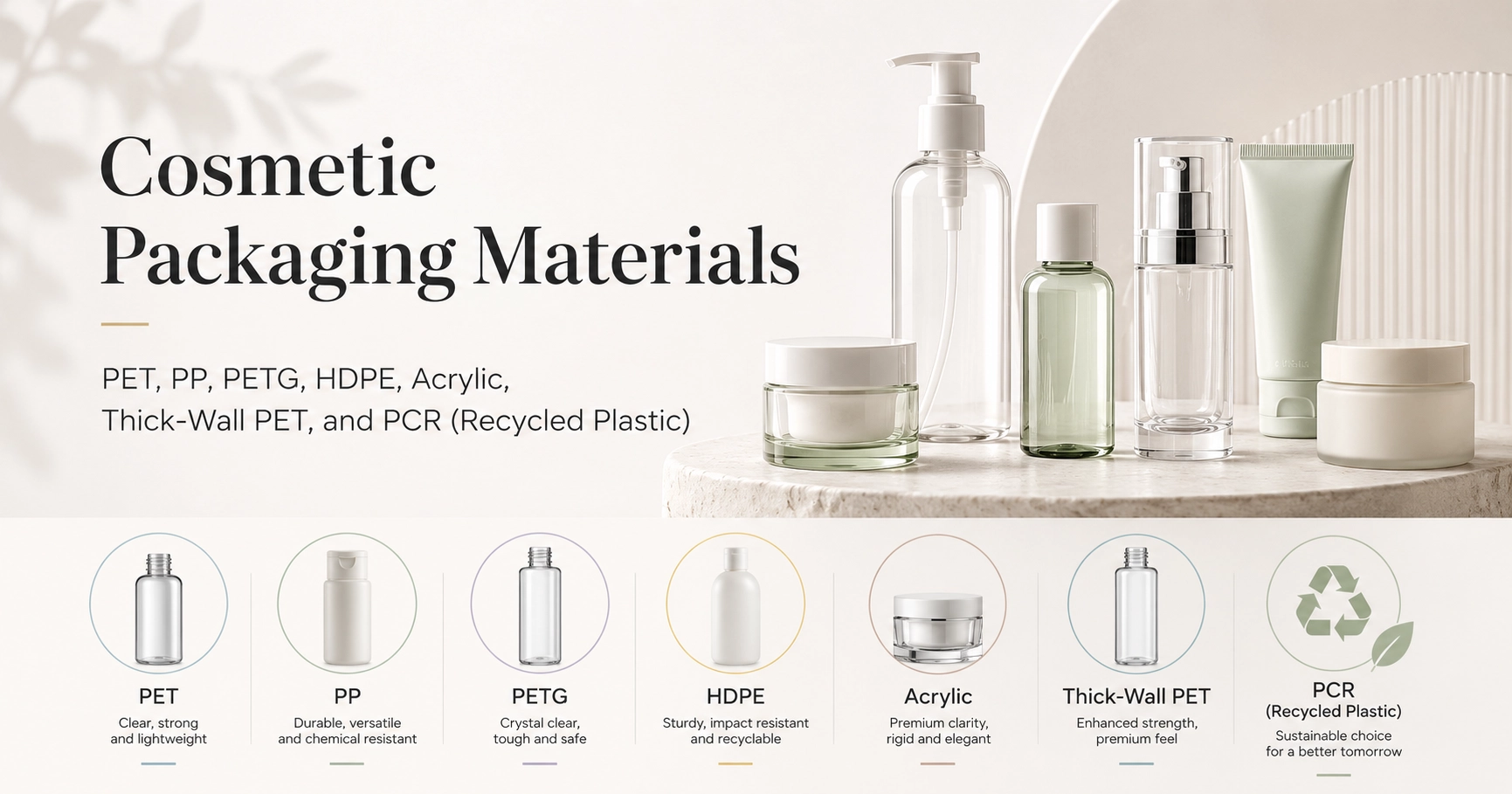
PCR Packaging Is Useful, but It Is Not Always Simple
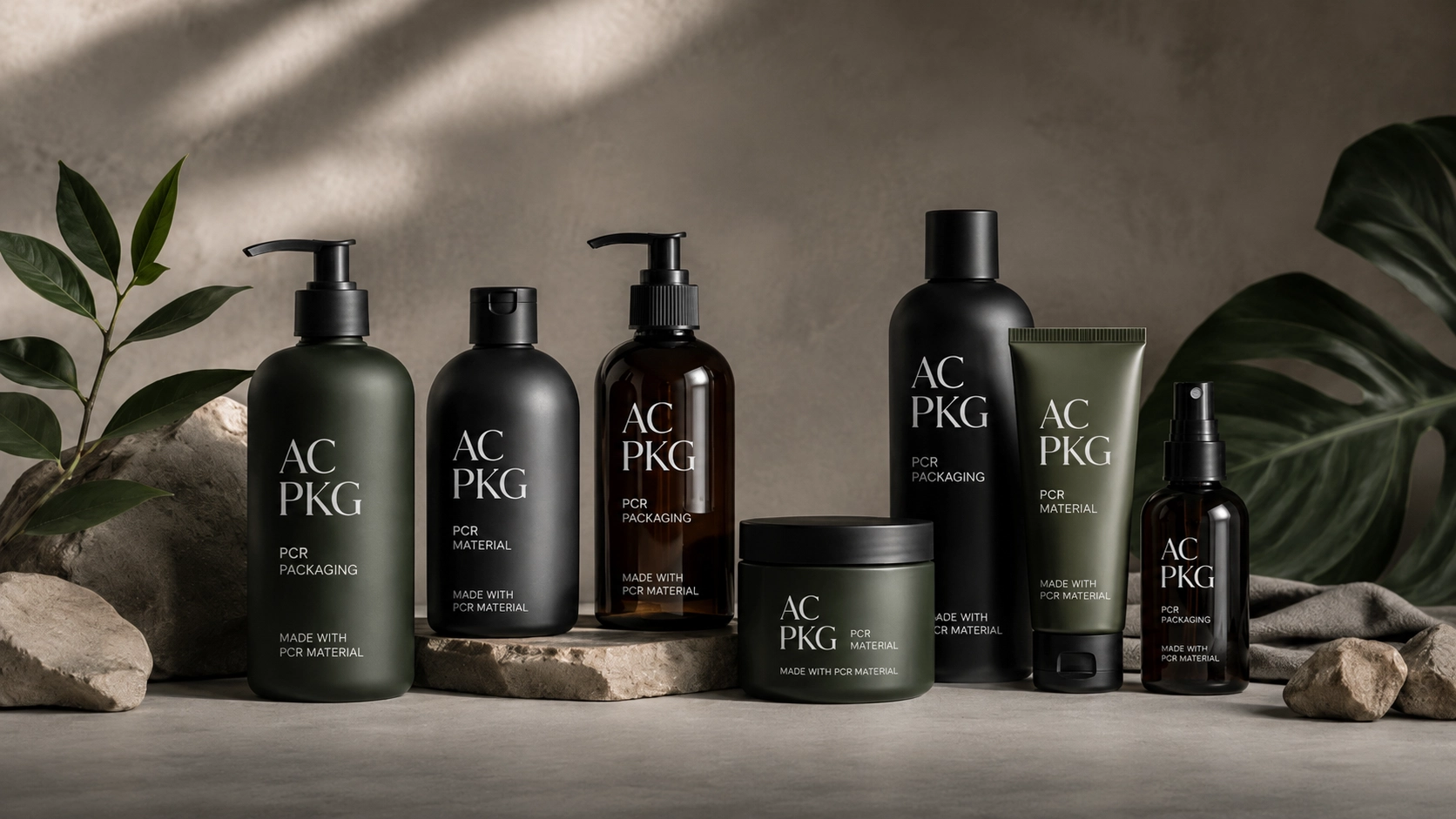
PCR packaging is now requested more often by skincare, cosmetic, and personal care brands. Many brands want to reduce virgin plastic use and add a stronger sustainability message to their product line.
This direction is good. But PCR material needs more practical judgment than many people expect.
Compared with virgin plastic, PCR may have more variation in color, transparency, smell, and material stability. Small black specks or slight yellowing may appear in some batches. The toughness may also vary depending on the recycled material source and the final PCR percentage.
This does not mean PCR packaging is a bad choice. It only means the brand should know what to expect before production.
For dark-color bottles, matte lotion bottles, body wash bottles, shampoo bottles, or packaging that does not require high transparency, PCR can be a very suitable option. For clear cosmetic bottles, transparent PET jars, or luxury skincare packaging that requires a very clean appearance, going directly to 100% PCR may not be the safest starting point.
In many projects, a balanced PCR percentage is more practical. It can support the brand’s sustainability direction while keeping better control of appearance and production stability.
For some formulas, a multi-layer structure can also be considered. The recycled material can be used in the middle or outer layer, while the formula-contact layer remains virgin material. This helps reduce risk when the formula is more sensitive.
Before confirming PCR bottles, PCR jars, or PCR cosmetic tubes, we usually suggest checking the PCR percentage, color expectation, transparency requirement, odor control, formula compatibility, drop test result, capping performance, and shipping stability.
PCR is not only a marketing word. It still has to work as real packaging.
Refillable Packaging Needs a Good Structure
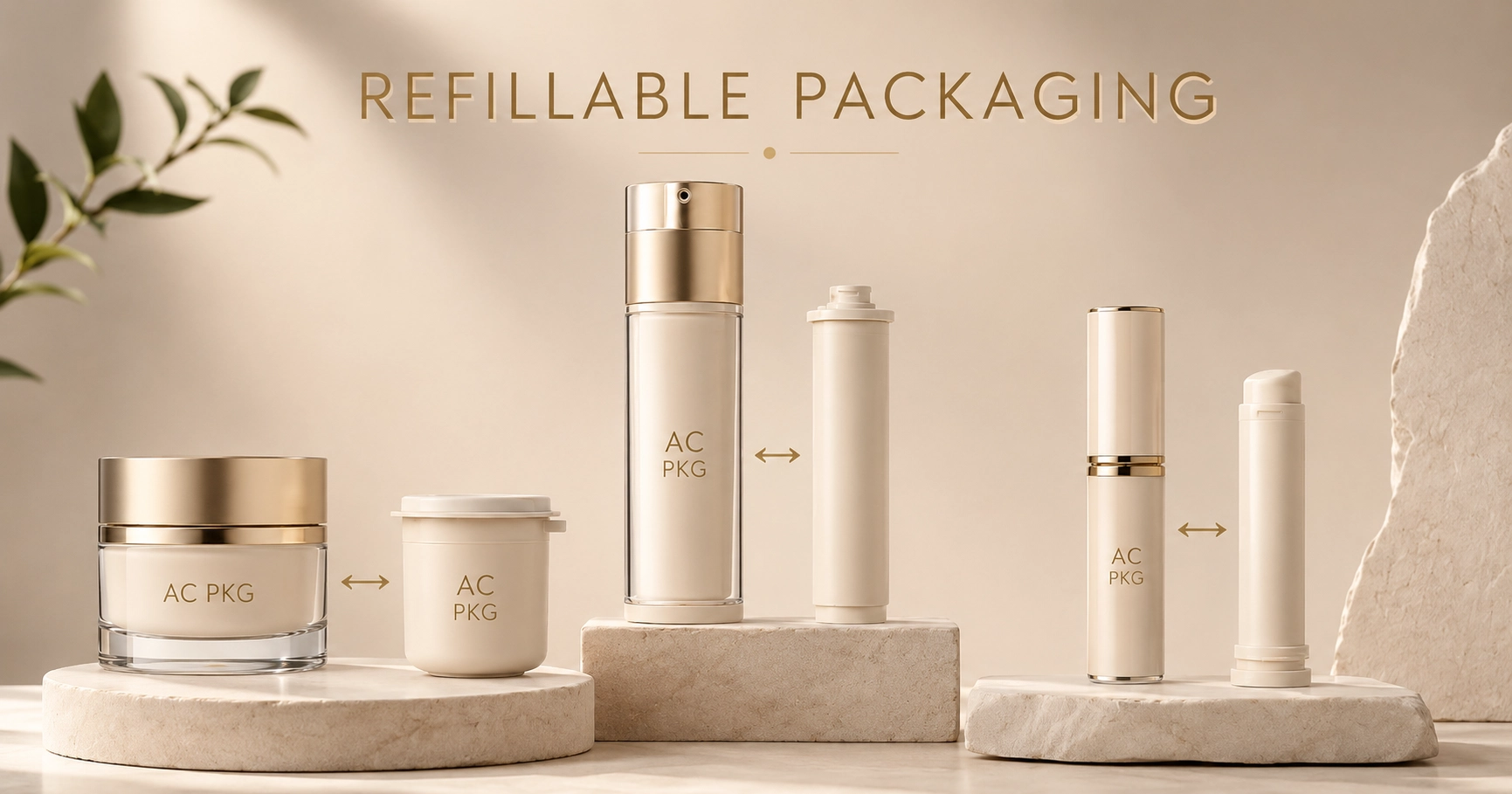
Refillable packaging looks simple from the outside. The idea is easy to understand: keep the outer container and replace the inner part.
But in real development, the structure needs careful work.
This is especially true for refillable cream jars, refillable airless bottles, replaceable inner cups, and cartridge-style skincare packaging.
If the inner cup is too loose, it may move inside the outer jar. If it is too tight, the customer may find it difficult to remove. If the locking structure is weak, the refill part may not feel secure. If the outer shell scratches too easily, the reusable design will lose its premium feeling after a short time.
For skincare brands, refillable packaging is not only about reducing material use. It also affects the consumer experience.
A good refillable jar or airless bottle should be easy to replace, but still feel stable. The outer part should look good for long-term use. The inner refill should be lighter, practical, and cost-efficient for repeat orders.
During development, we usually pay attention to the locking method, inner cup stability, drop test performance, replacement experience, outer shell material, surface protection, and decoration durability.
The customer should feel that the refill system is simple. But from the supplier side, the structure behind it needs to be tested carefully.
Pumps, Sprayers, and Closures Should Match the Real Formula
Pumps and closures are easy to underestimate, but they often decide whether the final packaging works well.
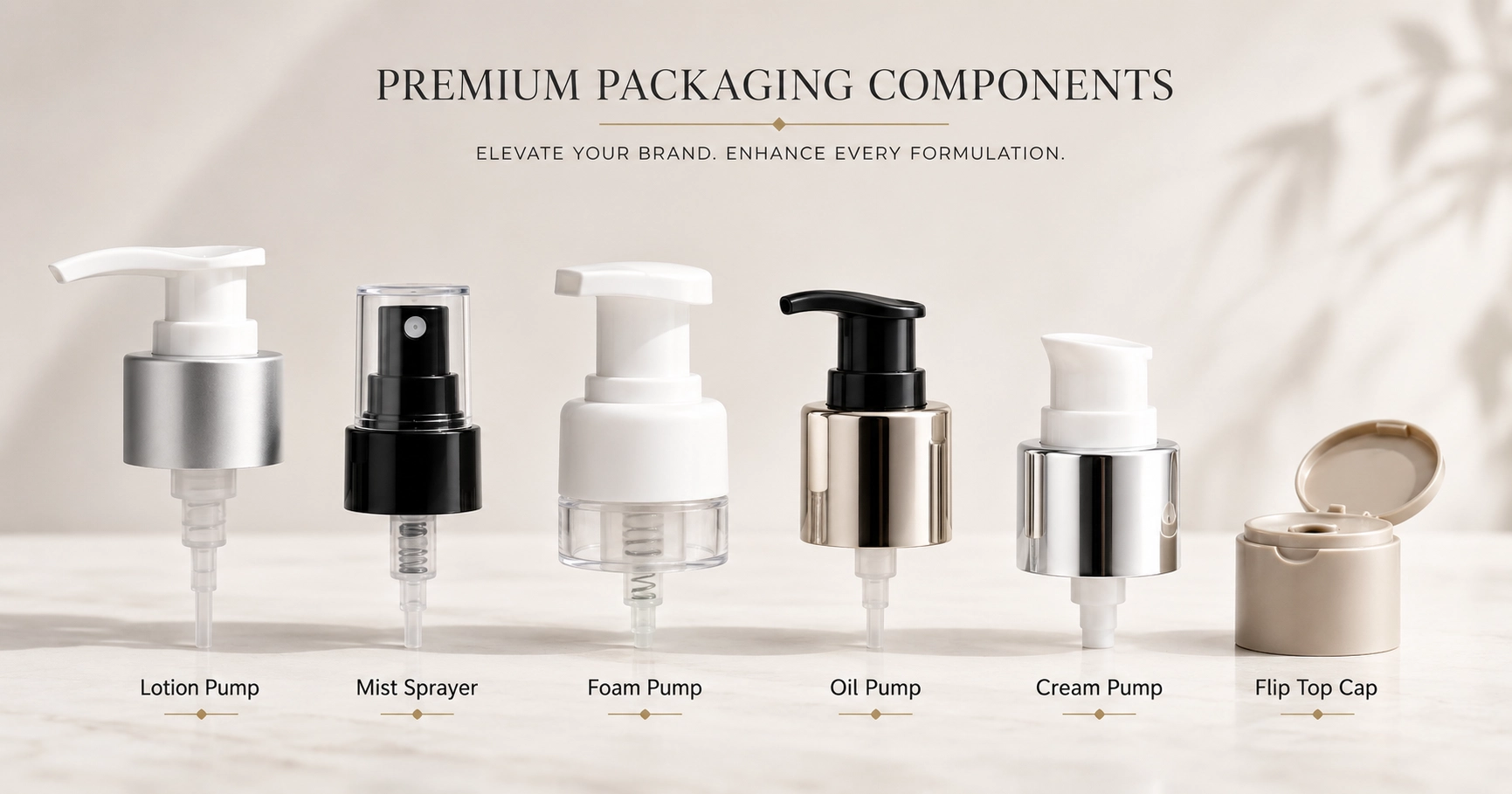
A lotion pump, mist sprayer, foam pump, oil pump, cream pump, or flip-top cap may look suitable from the outside, but its real performance depends on the formula and use scenario.
Testing with water is not enough for many skincare and personal care products.
Toner, makeup remover, serum, lotion, sunscreen, shampoo, body wash, hand cream, and cleansing oil all have different flow behavior. A pump that works well for one formula may not work well for another. Thin formulas may bring backflow or leakage risk. Thick formulas may need stronger rebound and a more suitable output volume.
This becomes more important when brands want mono-material packaging or all-plastic pumps. These solutions are useful for recycling, but the pump still has to work in daily use.
Before confirming a pump, sprayer, or closure, it is better to test it with the real formula, not only with water. Output volume, rebound speed, leakage risk, bottle neck matching, long-term storage, and consumer use feeling should all be checked.
A sustainable pump is only useful when it also works smoothly.
Cosmetic Tubes Also Need Compatibility Testing
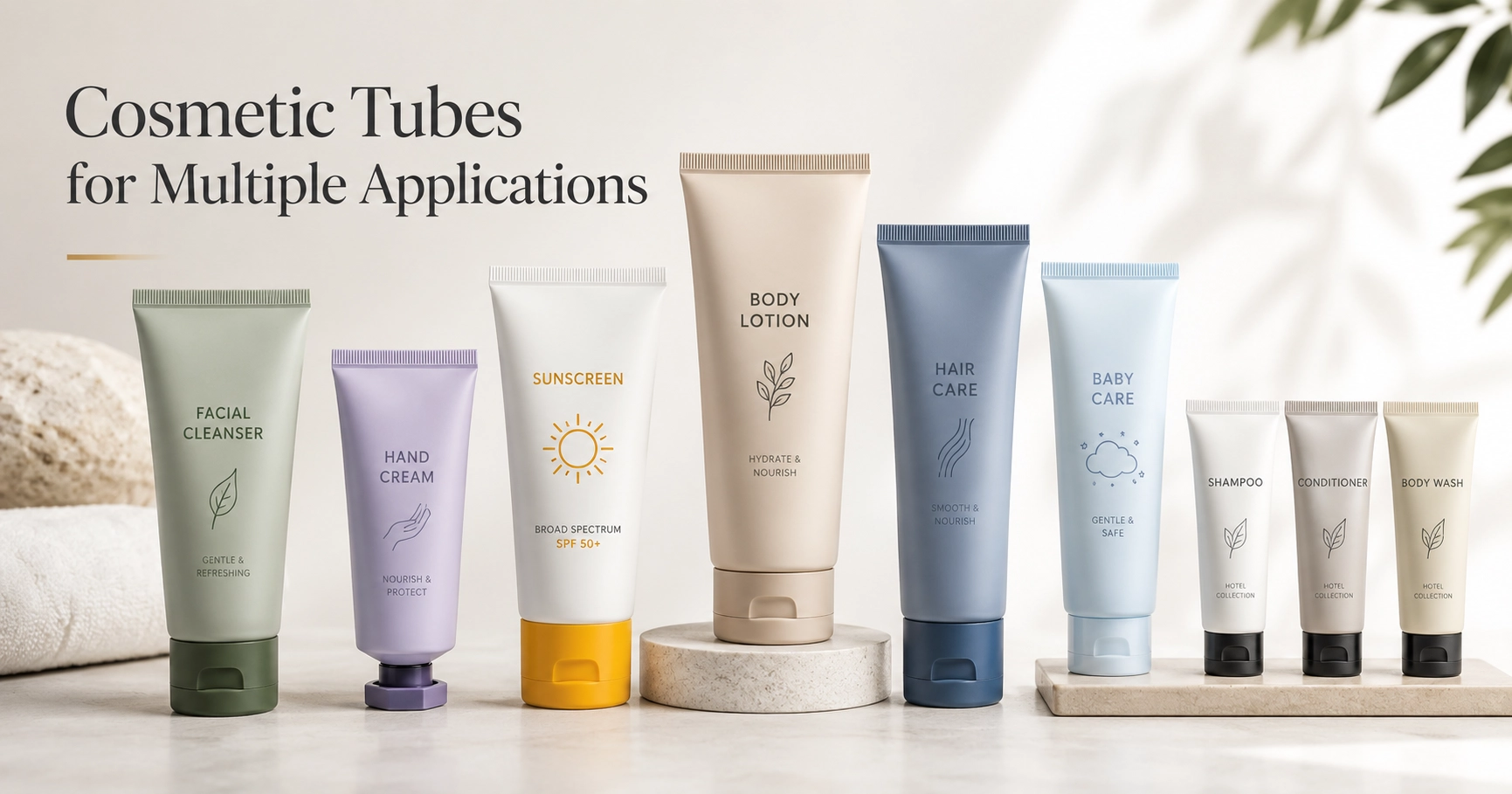
For skincare and personal care brands, cosmetic tubes are widely used for facial cleanser, hand cream, sunscreen, body lotion, hair care products, baby care products, and hotel amenity products.
Compared with bottles and jars, tubes may look easier to handle, but they also need careful checking.
The tube material, shoulder structure, cap matching, sealing strength, printing method, and formula compatibility all matter. For example, some formulas may require ABL tubes, PBL tubes, PE tubes, or soft-touch tube finishes. Some products need a flip-top cap, while others may need a screw cap or special applicator.
If the tube is too soft, it may deform easily during transport. If the sealing is not strong enough, leakage may happen after filling. If the decoration is not suitable, the logo or printing may not look stable after handling.
For tube packaging, we usually suggest checking the formula type, tube layer structure, capacity, cap style, sealing method, printing effect, and carton packing before mass production.
Filling-Line Testing Should Not Be Left Until the End
One thing we often see is that the filling factory joins the discussion too late.
The brand may already confirm the skincare bottle shape, pump, cap, cream jar, tube, and decoration. Then the packaging is sent to the filling factory for testing. If something does not match the machine, changing the design becomes slower and more expensive.
For automatic filling lines, small packaging details can make a big difference.
The bottle diameter, bottom stability, neck size, cap thread, pump height, labeling area, carton packing method, and even the surface finish may affect production speed. A bottle that stands well on a table may still wobble on a fast line. A cap that closes well by hand may not behave the same way under machine torque.
For brands working with overseas filling factories, this step is even more important. Different factories may use different machines and different settings.
It is always better to check these details before mass production, not after the filling line has already stopped because of a packaging issue.
Transport Testing Is Part of Packaging Development
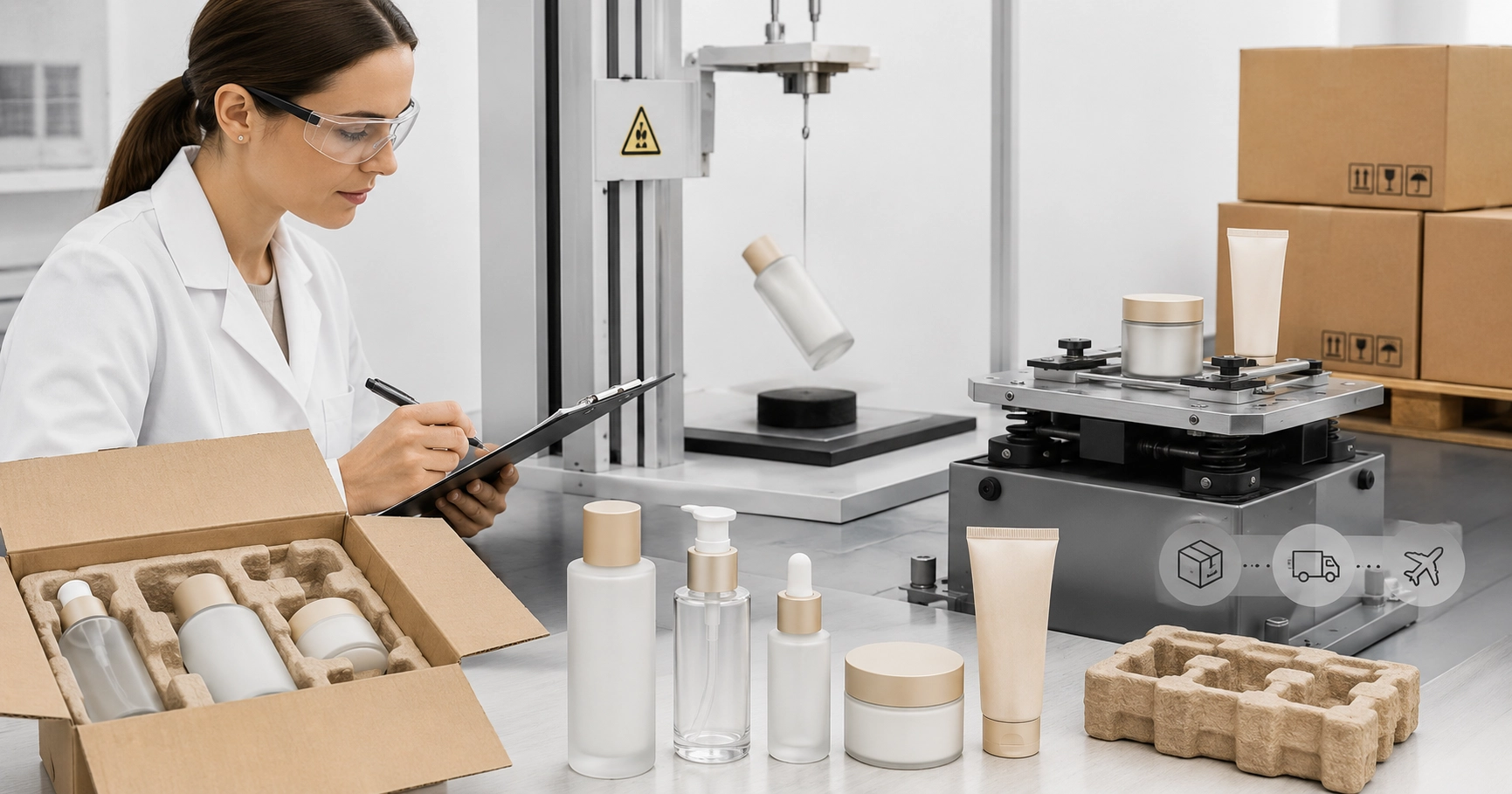
A package does not only need to pass sample approval. It also needs to survive shipping.
For export orders, finished products may go through container loading, warehouse stacking, temperature changes, long-distance transport, and repeated handling. Some problems only appear after this process.
Common issues include leakage, deformation, scratches, cracked caps, loose pumps, broken sprayers, or oil stains inside the carton.
This can happen with PET bottles, HDPE bottles, cream jars, cosmetic tubes, airless bottles, sprayer bottles, and hotel amenity bottles if the structure or packing method is not suitable.
For this reason, leakage testing, vacuum testing, drop testing, carton compression testing, and temperature or humidity testing are useful steps for many projects.
These tests may feel small compared with the whole packaging development process, but they can help avoid much bigger problems later.
For cross-border e-commerce, overseas warehouses, hotel amenity projects, and retail product lines, transport performance should be taken seriously.
How Guangzhou AC Skincare Packaging Supports Custom Packaging Projects
Guangzhou AC Skincare Packaging Co., Ltd. is a custom packaging supplier for skincare, cosmetics, personal care, hotel amenities, home care, baby care, pet care, and filling factory projects.
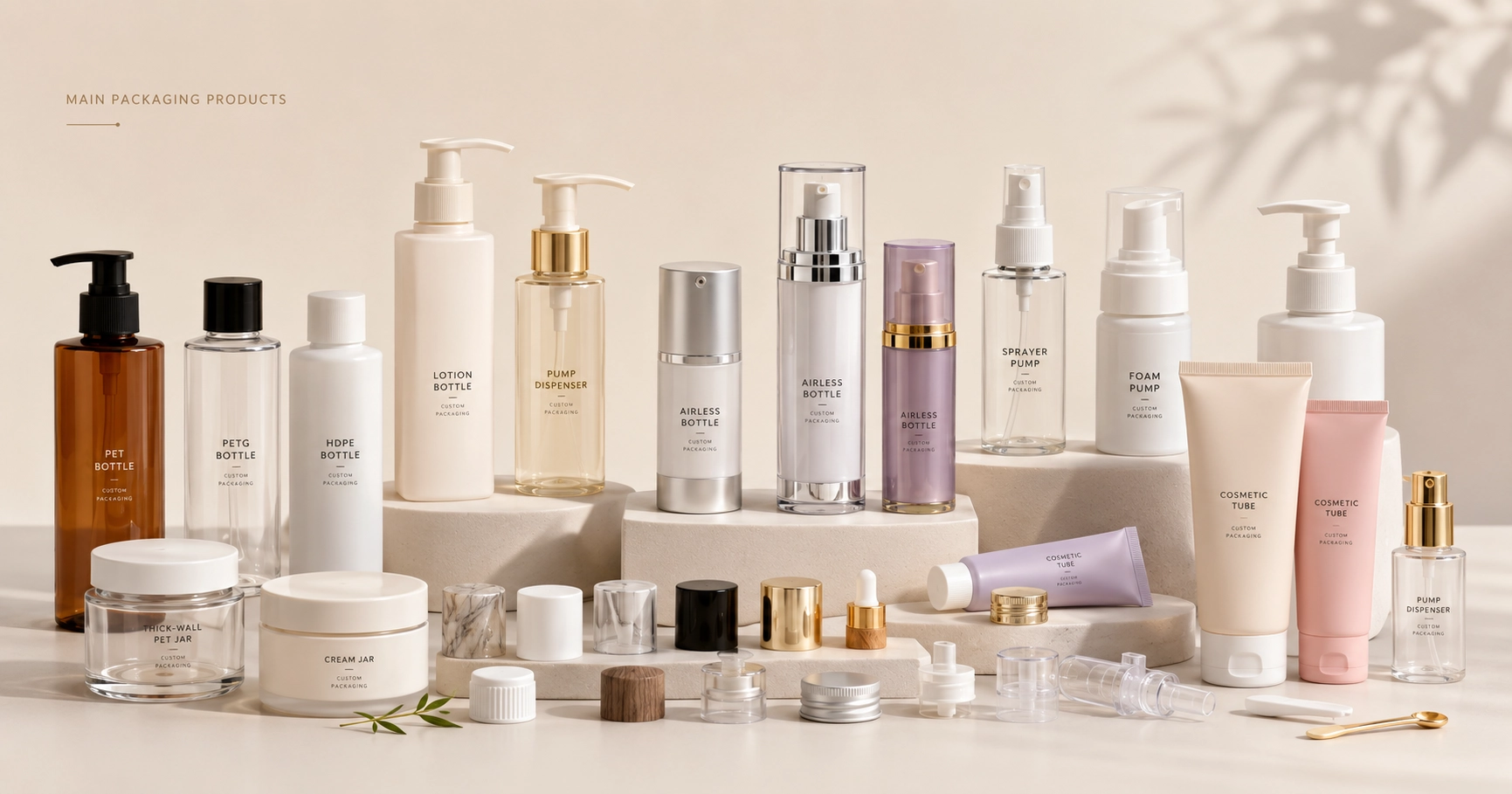
Our main products include skincare bottles, cosmetic bottles, airless bottles, lotion bottles, PET bottles, HDPE bottles, PETG bottles, cream jars, thick-wall PET jars, cosmetic tubes, soft tubes, pumps, mist sprayers, foam pumps, lotion pumps, caps, closures, and related packaging accessories.
We support custom color, logo printing, surface finishing, bottle and jar matching, pump and cap matching, PCR packaging, refillable packaging, eco-friendly material options, private mold development, and sample preparation.
For custom projects, we do not only provide existing packaging options. We also help clients review material choice, mold feasibility, decoration method, pump and cap matching, formula compatibility, sealing performance, filling-line requirements, and transport risk.
In many projects, the most helpful thing a supplier can do is not simply say yes to every request. It is to help the client see which idea is easier to produce, which material is more suitable, and which detail should be tested before bulk production.
Good skincare packaging should look attractive, but it also needs to work in real production and real market use.
If you are developing custom skincare packaging with PCR materials, refillable structures, special pumps, cosmetic tubes, private molds, or complete bottle-and-closure matching, reviewing these practical details early can save a lot of trouble later.
Company: Guangzhou AC Skincare Packaging Co., Ltd.
Contact: [email protected]
Official Website: www.skincarepkg.com
FAQ
What products does Guangzhou AC Skincare Packaging supply?
Guangzhou AC Skincare Packaging Co., Ltd. supplies custom skincare packaging and cosmetic packaging, including skincare bottles, cosmetic bottles, airless bottles, lotion bottles, PET bottles, HDPE bottles, PETG bottles, cream jars, thick-wall PET jars, cosmetic tubes, soft tubes, pumps, mist sprayers, foam pumps, lotion pumps, caps, closures, and related packaging accessories.
Can you provide custom skincare bottles and cosmetic jars?
Yes. We can support custom skincare bottles and cosmetic jars with different materials, capacities, colors, logo decoration, surface finishes, and matching accessories. Common options include PET bottles, HDPE bottles, PETG bottles, airless pump bottles, cream jars, and thick-wall PET jars.
Do you support custom logo and color for packaging?
Yes. We can help brands customize bottle color, jar color, tube decoration, logo printing, hot stamping, silk screen printing, matte finishing, glossy finishing, spraying, electroplating, and other surface processes. The suitable process depends on the material, order quantity, and final packaging effect.
Can you supply pumps, sprayers, caps and closures together with bottles?
Yes. We can provide matching lotion pumps, mist sprayers, foam pumps, cream pumps, oil pumps, flip-top caps, screw caps, over caps, closures, and other accessories. For skincare and personal care packaging, pump and cap matching is very important because it affects leakage control, dispensing performance, and filling-line stability.
Is PCR packaging suitable for skincare and cosmetic products?
PCR packaging can be suitable for many skincare, cosmetic, and personal care products, including lotion bottles, shampoo bottles, body wash bottles, cosmetic jars, and some tube packaging. However, the PCR percentage, color, odor, transparency, formula compatibility, and transport performance should be checked before mass production.
Can you make refillable skincare packaging?
Yes. We can support refillable skincare packaging, such as refillable cream jars, replaceable inner cups, refillable airless bottles, and cartridge-style packaging structures. For refillable packaging, the locking structure, replacement experience, outer shell durability, and inner refill cost should all be reviewed early.
Do you provide cosmetic tubes for skincare and personal care brands?
Yes. We can provide cosmetic tubes and soft tubes for facial cleanser, hand cream, sunscreen, body lotion, hair care products, baby care products, hotel amenities, and other personal care products. Tube options may include PE tubes, ABL tubes, PBL tubes, different cap styles, custom printing, and surface finishing.
Can your packaging be used by filling factories?
Yes. Many of our packaging solutions are suitable for filling factory projects. We can help review bottle stability, neck size, pump matching, cap fitting, capping torque, sealing performance, carton packing, and transport risk before mass production. This helps reduce problems during filling and packing.
Do you support private mold development?
Yes. Guangzhou AC Skincare Packaging can support private mold development for brands that need a special bottle shape, jar structure, tube design, cap style, or customized packaging system. Before opening a new mold, we usually suggest reviewing the material, capacity, closure matching, filling method, and production feasibility.
What types of brands can use your packaging?
Our packaging can be used for skincare, cosmetics, personal care, hair care, home care, baby care, pet care, hotel amenities, and filling factory projects. Common product applications include serum, lotion, cream, toner, facial cleanser, sunscreen, shampoo, body wash, hand cream, cleansing oil, and travel-size hotel products.
Why should brands test packaging before mass production?
Packaging testing helps reduce problems such as leakage, pump failure, bottle deformation, cap cracking, unstable capping, scratches, and transport damage. For custom skincare packaging, it is better to check formula compatibility, pump performance, sealing, filling-line requirements, and shipping conditions before bulk production.
How can I contact Guangzhou AC Skincare Packaging?
You can contact Guangzhou AC Skincare Packaging Co., Ltd. for custom skincare packaging, cosmetic bottles, cream jars, cosmetic tubes, pumps, sprayers, caps, closures, PCR packaging, refillable packaging, and private mold projects.
Email: [email protected]
Official Website: www.skincarepkg.com